
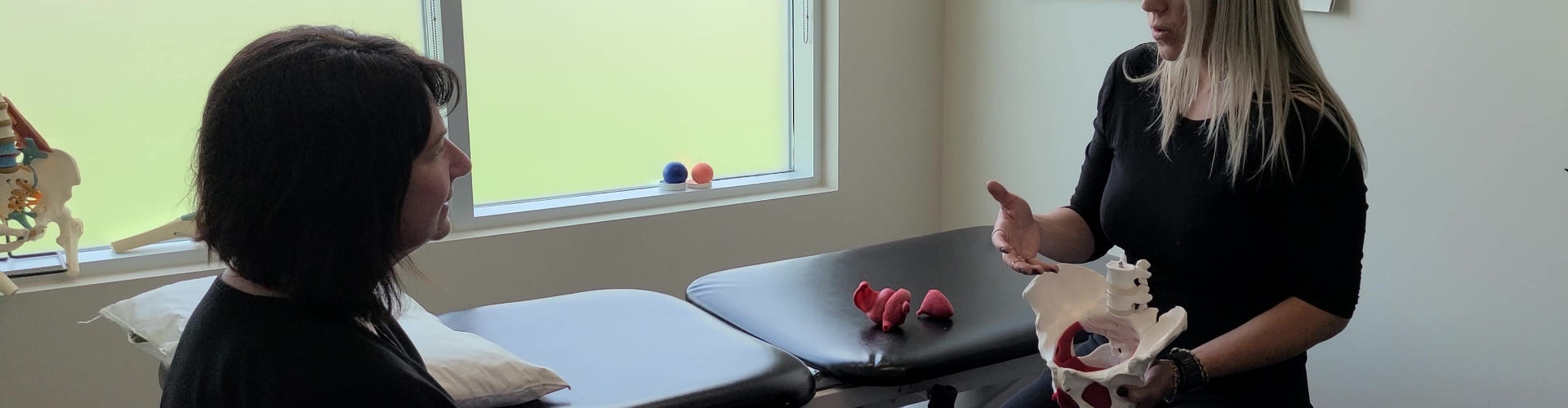
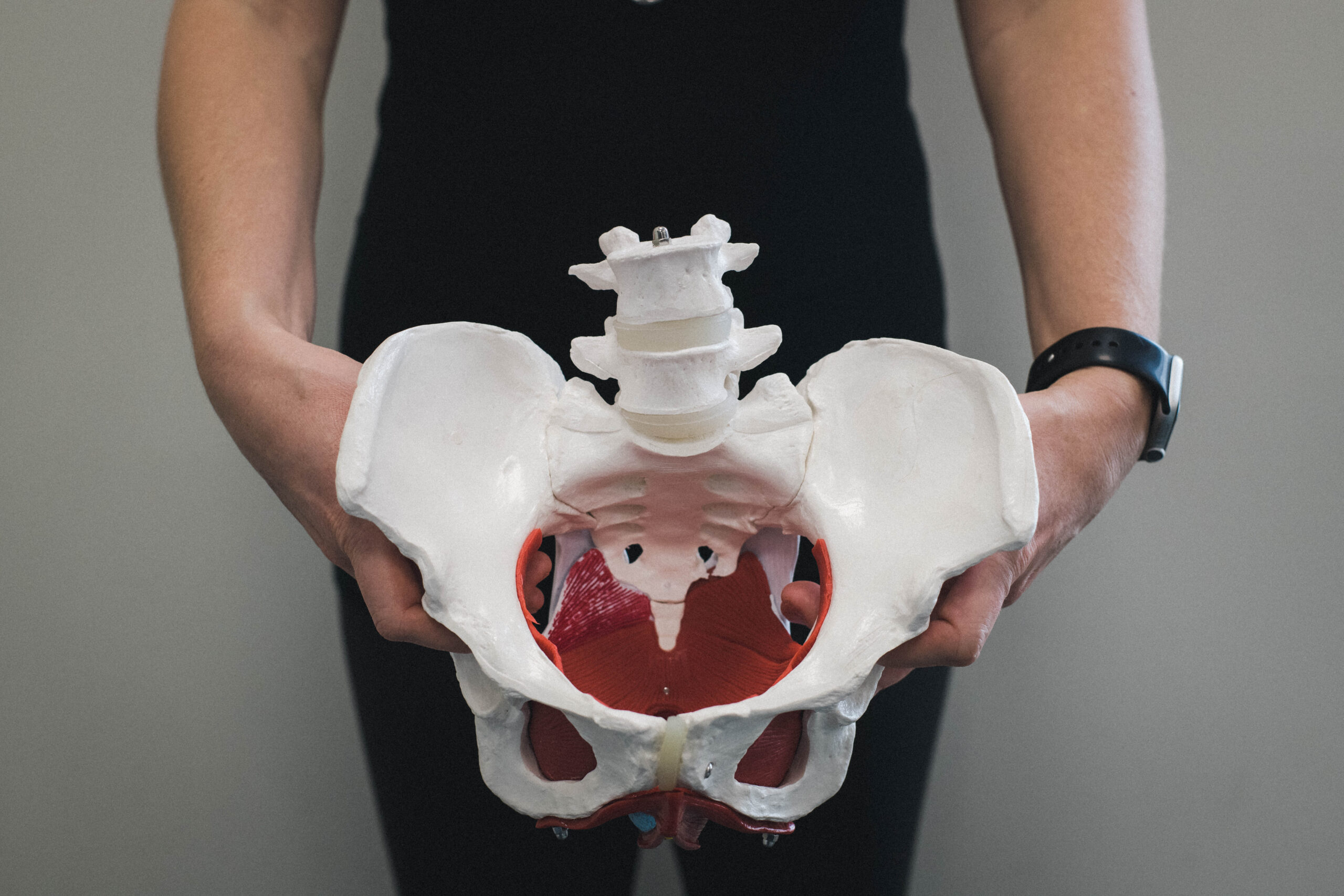
Pelvic Health Physiotherapy is customized to each patient and integrates techniques that include:
- Pelvic floor muscle retraining
- Bladder retraining
- Education, including nutrition and scheduling habits
- Hands-on techniques
Urinary or anal/fecal incontinence, pelvic organ prolapse, lumbopelvic pain, painful intercourse (dyspareunia) and perinatal conditions are all appropriate for Pelvic Health Physiotherapy.
How will Pelvic Health Physiotherapy Help Me?
Physiotherapy is internationally recognized as the first choice of treatment for incontinence and prolapse. We use evidence-based therapy techniques and an education-first based approach to treatment. Our hands-on treatment of the joints, muscles, and tissues of the pelvis, and connecting areas of the body, positively impacts your pelvic floor function.
If you want to get control of your body and live your life to your fullest potential, come see one of our pelvic health physiotherapists.
Articles to Read:
Postpartum tips – an honest conversation
Why Pelvic Floor Physiotherapy During Pregnancy?
“Peezing” – Leaking urine when you sneeze – isn’t “normal” and it can be treated!
Who is a candidate for pelvic health physiotherapy?
People who:
- Leak urine when they cough, laugh, sneeze or exercise
- Leak urine due to inability to hold during strong urges
- Urinate more than 8 times a day
- Have difficulty initiating urination
- Feel that they have not fully emptied their bladder after urination
- Have feeling of pressure or heaviness in their pelvic region
- Strain to have a bowel movement
- Experience pain during or after bowel movement
- Have pain with sexual intercourse or difficulty with penetration
- Have pelvic pain (vaginal, rectal or perineal)
- Have pelvic girdle, buttock, low back or coccyx pain
- Had an Episiotomy, Forceps delivery or C section
- Pregnant people who would like to decrease the risk of tearing during labor
Have been diagnosed with:
- Stress or Urge Incontinence
- Pelvic Organ Prolapse
- Overactive Bladder
- Pregnancy related pain (pre and post-partum)
- Interstitial Cystitis
- Dyspareunia
- Vaginismus
- Vulvodynia/Vestibulodynia
- Pudendal Neuralgia or Entrapments
- Coccydynia
- Chronic Prostatitis/chronic pelvic pain syndrome

Kerry Worbets
PT, MScPT, Bkin
Your Next Steps…
Book An Appointment
Determine Coverage
Get An Assessment
Start Treatment