
Concussion! What do I do?
While most health care professionals have some basic concussion training, our clinicians have trained and been mentored by Dr. Kathryn Schneider, PT, PhD, the clinician scientist who has led clinical practice changing concussion research, globally.
Step 1
First, it is important to make sure that you do not have a more severe type of brain injury that requires urgent medical attention. If you have any of the following symptoms after injury, call an ambulance or go to your nearest emergency department:
- Severe or increasing headache
- Loss of consciousness
- Seizure or convulsion
- Vomiting
- Double vision
- Weakness or tingling/burning in arms or legs
You can also refer to the Concussion Recognition Tool (CRT) 6.
Step 2
If you suspect that you have a concussion, it is critical to stop any activities that put you at risk for another head impact (such as a collision, fall or contact with another person or object).
For the first 24-48 hours you should also limit screen time and physical activity. Light walking after the initial 24 hours is alright, as long as it does not increase your symptoms more than a subjective 2/10 points.
After the initial 24-48 hours it is recommended that you can gradually return to your activities of daily living, provided there is no risk of another head impact and that any symptoms are increased only “mildly” (<2/10) and briefly (lasting for less than one hour). You can read more about concussion management in this article written by Dr. Schneider for the Sport Information Resource Canada (SIRC).
Step 3
You should not return to any at-risk activities until you have no further concussion related symptoms and you have been cleared by your health care professionals. Clearance to return is one of the most important steps you can take to prevent worsening symptoms, sustaining another head impact when you are not yet recovered (which could result in a more severe brain injury) and potential long-term concerns. We will collaborate closely with your medical doctor every step of the way.
Kathryn Schneider, PT, PhD, at our Evidence Sport and Spine North clinic, led one of the first high quality research trials that found that an active approach to rehabilitation, specifically using personalized cervicovestibular physiotherapy treatment, helped patients get better faster than resting and typical gradual return to activities. Since this trial was published in 2014, more studies have been done to support these results and international consensus statements and clinical practice guidelines recommend this type of rehabilitation after a concussion for people that have dizziness, headaches and/or neck pain. She also co-led the scientific committee and was co-first author on the Amsterdam International Consensus Statement on Concussion in Sport, which summarized the world’s literature and has informed the way that concussions are prevented, assessed and managed internationally. Kathryn Schneider is internationally sought for her clinical experience and research. If you have seen any of her presentations on concussion research and treatment, you will know that athletes, clinicians, sport & health organizations and researchers around the world defer to her for answers. She also leads a Massive Open Online Course (MOOC) on concussion that is freely available for anyone who would like to take the course.
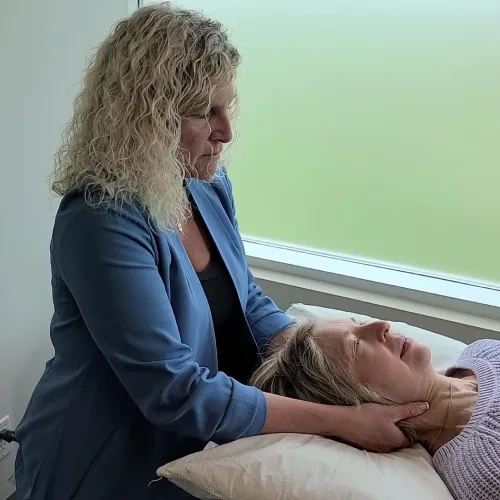
The physiotherapists that deliver our concussion program have completed additional concussion rehabilitation education with Kathryn and are able to deliver the most up to date treatment recommendations that are informed by this work. They can also assist in communicating with your physician(s) and identifying other health care professionals that may be helpful for you to see based on their evaluation.
Physiotherapists can assist with multiple different problems related to concussion including:
- Headaches
- Dizziness
- Unsteadiness
- Neck pain
- Blurred vision
- Feeling “off”
- Referral to other health care professionals where this is warranted
If you are doing research on someone else’s behalf (so they can have a screen break!), consider these resources.
Kathryn Schneider, PT, PhD has written a ‘best practices‘ document for the Sport Information Research Centre, applicable to all sports. This details the latest guidelines and a summary of some of the latest information, including some of the action plans Dr. Schneider presented to the Government of Canada.
Check an interview transcript from Dr. Kathryn Schneider, PT, PhD and Dr. Cory Wowk, MD.
Parents, coaches, and trainers need to be part of the prevention strategy.
Read the resources available at Parachute Canada and let our multidisciplinary group of clinics take good care of you.
Patients who have sustained a concussion will be triaged and we will recommend a standard or extended assessment.
For most patients, a standard one-hour assessment that addresses the key symptoms and systems that are affected is sufficient to get started on a rehabilitation program. In some cases, if you/your patient has multiple symptoms and areas that are affected, a comprehensive assessment that evaluates multiple different systems in detail could be helpful. In this case, we offer a 2.5 hour assessment option.
| Standard Assessment | Extended Assessment | |
|---|---|---|
| ⏱️ Appointment duration | 1 hour | 2.5 hours |
| ⏳ Time since injury* | Typically within 4 weeks | Typically > 4 weeks |
| 🧠 Symptoms | 1-2 main symptoms | Multiple symptoms |
| Questionnaires | ✔️ | ✔️ |
| Screen | Detailed Exam | Screen | Detailed Exam | |
| 🧠 Neurological | ✔️ | +/- | ✔️ | ✔️ |
| 🦴 Cervical | ✔️ | +/- | ✔️ | ✔️ |
| 👂Vestibular | ✔️ | +/- | ✔️ | ✔️ |
| 💢 TMJ | ✔️ | +/- | ✔️ | ✔️ |
| 👁️ Oculomotor | ✔️ | +/- | ✔️ | ✔️ |
| 👁️↔️ Vestibular Ocular Motor (VOMS) | ✔️ | +/- | ✔️ | ✔️ |
| 🧍Balance | ✔️ | +/- | ✔️ | ✔️ |
| 🏃Physical Exertion** | – | – | – | ✔️ |
Standard assessment (one hour)
Typically for individuals within 4 weeks of injury, and with only one or two primary symptoms.
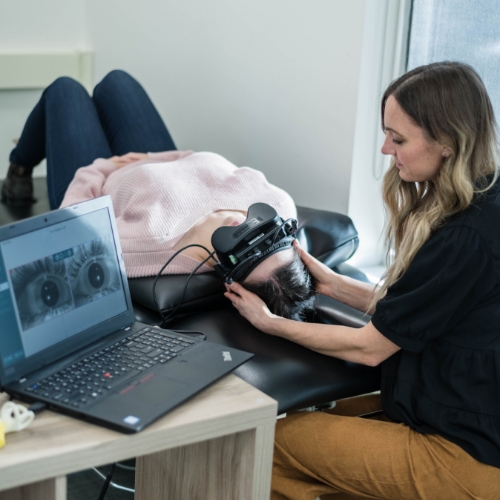
Key tests based on symptoms using a symptom targeted and exercise approach as tolerated by the patient based on the primary symptom generators. A screening of all relevant systems and a more comprehensive assessment of the primary symptom and related system(s) will be completed. Components may include (again based on the primary symptom generators): vestibulo-ocular reflex, cervical spine, oculomotor, balance, dynamic balance, infra-red blackout goggles (if indicated).
Overall cost of Assessment varies clinic to clinic, from $130 to $200.
Extended assessment (2.5 hours)
Typically for individuals who are 4 weeks or greater post injury or who are travelling in to Calgary for an assessment.
Detailed assessment of all relevant systems including neurological screen, vestibulo-ocular reflex, cervical spine, balance, dynamic balance, infra-red blackout goggles, vestibular ocular motor screen (VOMS), and physical exertion. Overall cost of Assessment $600. Only available at Evidence Sport and Spine North.
Clinicians with additional training conduct this type of assessment.
Referring clinicians can refer using a letter or our referral pad, found here.
The Most Common Questions our physiotherapists get about concussions
Q: How soon can I get back to my sport after a concussion?
A: Rest for 24-48 hours is absolutely paramount after any concussion. Returning to sport or play requires medical clearance. We will collaborate with your doctor or a Sport Medicine Physician as necessary to provide appropriate guidelines for you and a gradual return to sport.
Q: Won’t a concussion just get better with rest?
A: The majority of symptoms from a concussion can resolve independently within 10-15 days. Complications can occur without proper medical monitoring and the careful prevention of further injury even within this time period. To avoid long-lasting or serious complications, it is critical to seek a multidisciplinary approach including physiotherapy.
Q: If I have had a concussion in the past, does that put me at a higher risk of another concussion?
A: Unlike physical injuries, concussion recurrence does not have the same body of evidence involved. Some of this is because a concussion can come from multiple mechanisms of injury, ranging from slipping on ice to sport-related to a car collision. The most important part is to ensure you have medical clearance to begin a gradual return to your activities to reduce the risk of serious complications should a re-injury occur.
Q: What about imaging? Should I get a blood test or brain scan to diagnose a concussion?
A: Advanced imaging may be used in the emergency room to rule out life-threatening conditions. Concussion diagnosis, following the latest guidelines however, are individualized and continue to be based on healthcare provider assessments. While many forms of technology (such as brain scans, blood and saliva tests) hold promise from a research standpoint, these technologies aren’t yet ready for mainstream management of a concussion.
Your Next Steps…
Book An Appointment
Determine Coverage
Get An Assessment
Start Treatment