
Is Cracking One’s Neck Beneficial?
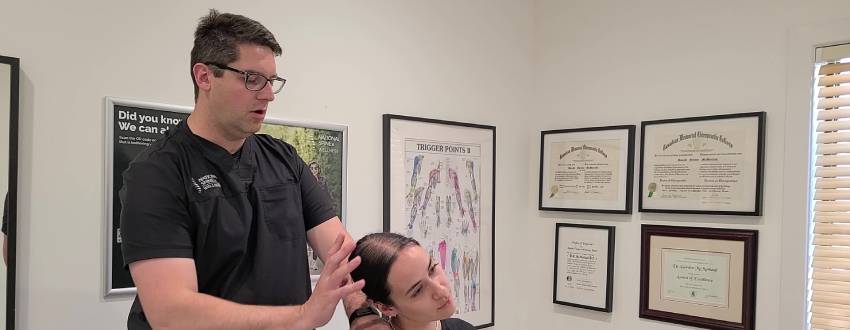
One of my patients, whom I’ll refer to as “Greg,” has been cracking his neck for years. Despite experiencing persistent tightness, his relief is temporary, lasting only a few minutes. He came to me seeking a more sustainable solution since self-manipulation, or “cracking,” offers limited benefits.
I am Dr. Josip, a chiropractor who treats neck and back pain patients. This article will discuss spinal adjustments, manipulations, or “cracking,” all of which mean the same thing and whether doing them on one’s neck is advisable.
The spine is a complicated structure comprising muscles, bones, joints, nerves, discs, ligaments, tendons, connective tissue, blood vessels, etc. The spine has many joints, which are intersections where two ends of the bone slide past each other. In fact, the human spine has 364 joints!
These spine joints can become stiff, tight, or locked, tightening the soft tissue, mainly the muscles around them, for protection. If you’ve ever slept in an awkward position and then woke up with neck pain and inability to shoulder check to one side, the most likely culprit is a sprained joint in your neck. Another common injury in the lower back is lifting, bending or twisting; the most plausible culprit is a sprained joint or a strained muscle.
The mechanical stiffness or tightness of spinal joints responds well to treatments designed to target the tight muscles and the spinal joints. One of the techniques I use as a chiropractor is an adjustment, often referred to as spinal manipulation or, in simpler terms, “cracking.” I want to emphasize that it took me a long time to master this skill, and while I don’t particularly like the term “cracking,” I will use it here to clarify my point.
What Is an Adjustment?
Spinal manipulation, adjustment, or “cracking” involves controlled force applied to joints to increase that joint’s mobility. There are three main manual treatment methods: massage, mobilization, and manipulation.
Massage involves slower-paced pressure and stretching, targeting muscles and fascia. Mobilization enhances joint motion through cyclic loads at lower velocities. Manipulation uses high-velocity, low-amplitude techniques to normalize joint function and relieve symptoms. All three of these methods can produce a “cracking” sound, which is referred to as a cavitation.
What Is Cavitation (the “Crack” Sound)?
Cavitation occurs when joint pressure drops, leading to gas formation and the characteristic cracking sound during movement. This process can increase joint range of motion, but excessive cracking may cause joint hypermobility and instability.
Cracking your neck is generally not advisable for two reasons: it can lead to excessive joint mobility, resulting in compensatory stiffness, and it may stress one side of the neck, causing stiffness in other areas. Though these effects might not be immediately noticeable, a trained practitioner can identify these issues.
Greg improved as he reduced his habit of self-manipulation, or “cracking.” When I examined his neck, I found that his upper neck joints were tight, while his mid-neck joints were overly mobile. Via manipulation or adjusting, I helped him loosen his upper neck and reduce his neck cracking.
I also assessed his neck for strength via a specialized neck machine in our office called the MCU and helped him strengthen his neck so that it did not feel tight or that he needed to crack it so frequently.
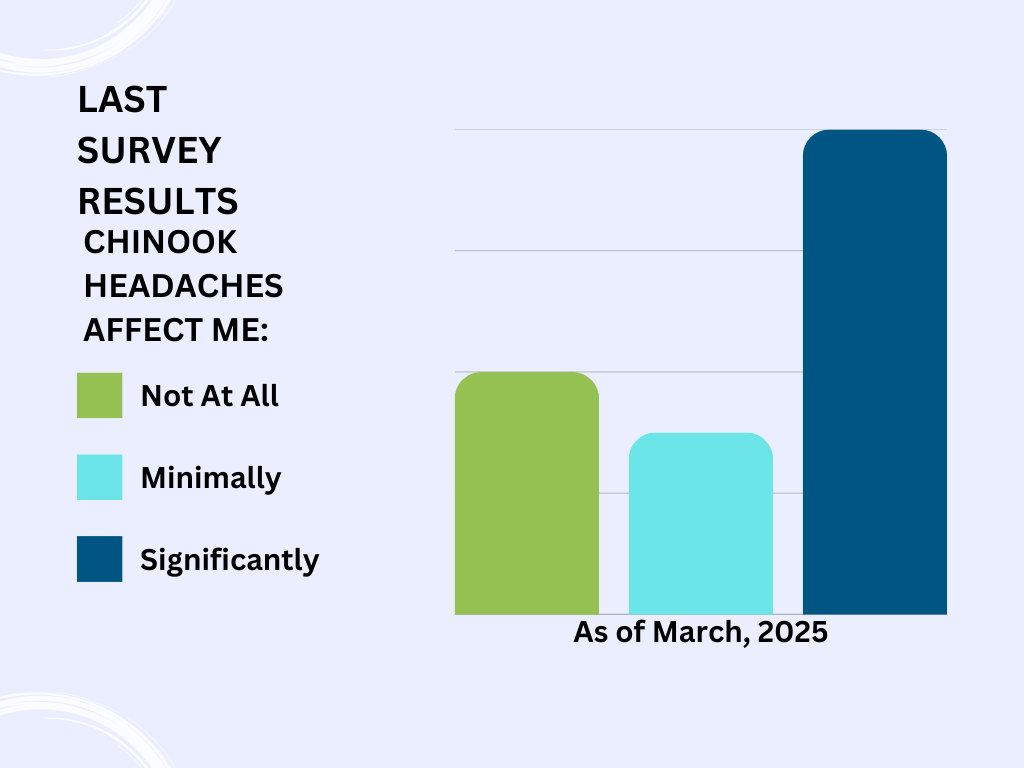
Current Results from our last Survey about how people are affected by Chinook headaches:
Read more about Dr. Josip here

Dr. Josip Batinić
Clinic Director, DC