

Discover Lasting Relief for Your Vertigo Symptoms at Momentum Health
At Momentum Health, our team of physiotherapists is dedicated to helping you find effective relief for your vertigo symptoms using evidence-based techniques. Guided by cutting-edge research and years of practical experience, we’re committed to restoring balance and improving your quality of life.
The vestibular system is located within the inner ear and works to maintain balance and orientation in our environment. It coordinates with the eyes and our nervous systems to manage head and eye movements, ensuring that we remain steady and focused even during rapid or unexpected changes in position.
A substantial number of Canadians experience vestibular dysfunction. According to Canadian Balance & Dizziness Disorders Society, up to 35% of Canadian adults aged 40 and older. This translates to over 6 million people whom may have experienced some form of vestibular problem at some point in their lives.
These symptoms can be debilitating, affecting not only physical capabilities (such as balance and fall risk), but also emotional and mental health.
Our physiotherapists commonly treat vestibular disorders and other balance-related issues. These conditions can lead to dizziness, unsteadiness, blurred vision, and even falls, significantly impacting daily activities and overall well-being.
Don’t let vertigo control your life any longer. Call (403) 455-0025 today to schedule an appointment with our team at Momentum Health!
What’s Causing My Dizziness?
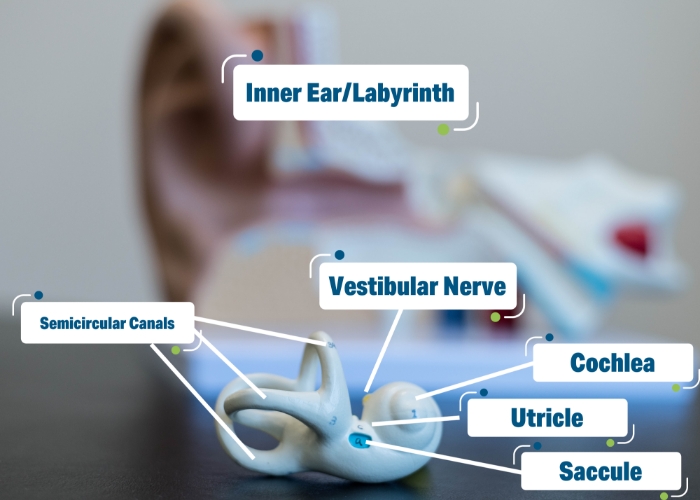
Exploring Vestibular System Dysfunction
Are you experiencing dizziness, imbalance, or vertigo and wondering what’s causing these uncomfortable sensations? As a leading authority in vestibular rehabilitation, Momentum Health is here to help you navigate the problems with the vestibular system and restore your sense of balance.
The vestibular system, a vital inner ear component, maintains our balance and orientation in our environment. It does so by relaying information about our body’s position and movements to the brain. When this system malfunctions, it can lead to conditions that affect our sense of balance and overall quality of life.
The most common vestibular disorders include:
- Benign Paroxysmal Positional Vertigo (BPPV): This condition occurs when calcium crystals in the inner ear become dislodged and interfere with the normal functioning of the vestibular system. BPPV is characterized by sudden bouts of dizziness triggered by specific head movements.
- Labyrinthitis: Labyrinthitis is caused by inflammation of the inner ear’s labyrinth due to viral or bacterial infections. Symptoms include dizziness, vertigo, hearing loss, and tinnitus.
- Cervicogenic Vertigo: The structures involved in this condition are located in the upper cervical spine joints, the very top of the neck where the head rests on the spine. Changes in the muscles responsible for head-on-neck control can mimic BPPV, but they are actually muscular issues that can be easily addressed.
- Vestibular Neuritis: Similar to labyrinthitis, vestibular neuritis involves inflammation of the vestibular nerve. Viral infections result in sudden, severe vertigo and imbalances.
- Meniere’s Disease: This is a chronic disorder of the inner ear that causes episodes of vertigo, ringing in the ears (tinnitus), and hearing loss. The exact cause of this condition remains unknown.
Physiotherapists treat vestibular system dysfunction resulting from injury, disease, or other issues such as aging or exposure to certain medications. Common limitations faced by patients with vestibular disorders include reduced balance, difficulty coordinating movements, and increased risk of falls.
At Momentum Health, our customized vestibular rehabilitation programs focus on improving balance, reducing dizziness, and enhancing the body’s ability to compensate for vestibular deficits. This evidence-based approach helps patients regain confidence and improve their overall quality of life.
Vestibular rehabilitation consists of various techniques and exercises, including:
Canalith repositioning maneuvers
These techniques help reposition the displaced calcium carbonate crystals in the inner ear to help alleviate vertigo symptoms for patients with BPPV.
Habituation exercises
These activities help reduce dizziness and vertigo symptoms by encouraging your brain to adapt to specific movements or positions that trigger your symptoms.
Gaze stabilization exercises
These exercises train your eyes to focus on a stationary object while your head moves, improving vision and balance.
Balance and gait training
Our physiotherapists will guide you through activities to enhance your stability, coordination, and overall function during daily tasks.
Frenzel goggles are at Seton, Evidence North, and
Evidence South locations.
Calgarians often ask us these questions about Vestibular Rehabilitation:
I have positional vertigo and was diagnosed with BPPV (Benign Paroxysmal Positional Vertigo). I was told to do the Epley maneuver, however this has not helped me. How come?
BPPV is a mechanical peripheral vestibular disorder where crystals (called otoconia) get dislodged and travel into any of the 3 semicircular canals within the inner ear structure. Between 85-95% of BPPV occurs in the posterior canal, and the Epley maneuver can be very effective in treating this canal. However, there is a smaller chance that a different canal is involved, which would require a different technique. Although this is less common, you can also have more than one canal involved. There is also a chance that the Epley maneuver is simply being done the wrong way or to the wrong side.
During our detailed physical exam we can help determine which side, and which canal(s) the crystals have dislodged to in order to provide the most effective treatment using the most appropriate maneuver. During these tests we are looking for the presence of nystagmus (an involuntary eye movement) that is typically brief and associated with vertigo symptoms. Each canal is associated with a characteristic pattern of nystagmus and so determining the direction of this eye movement is very helpful in diagnosis. However, this nystagmus can sometimes be missed and harder to see in room light. Our examination therefore uses special equipment called Video Frenzel Goggles that allows us to better see this eye movement as well as record it. This is especially helpful for those more complex cases and are used in select locations.
Does a Concussion always involve the Vestibular System?
Although dizziness is one of the more common symptoms after a concussion, especially in the first 1-2 weeks post injury, the vestibular system may or may not be involved. If dizziness persists beyond this time frame, a concussion assessment is beneficial to help determine the source of dizziness- whether it’s from the vestibular system, the neck, the eyes, physical exertion, headaches, OR a combination of these.
The Doctor said I have a Migraine after having a respiratory virus, but nothing is helping. What can I do?
Different conditions can share common symptoms, which can make diagnosis difficult.
A vestibular neuritis is a condition that affects the vestibular nerve and alters the signal being sent from your inner ear to your brain. This can occur after having a viral infection (more common than bacterial, although this can be the cause as well), and can leave you feeling dizzy, off balance, light and motion sensitive, and can even trigger headaches and brain fog. In the acute stage, a consistent and predictable pattern of nystagmus may be observed in room light. However, this nystagmus is often quickly suppressed making it hard to see, or or even become absent in room light. The video Frenzel goggles allow us to see and record nystagmus that can be missed for a more accurate diagnosis. This ability to rule in or out a vestibular problem can help us differentiate conditions that share common symptoms and ultimately guide treatment/management. This information would then be relayed back to your doctor, to ensure collaborative care.
Our physiotherapists will work closely with you to establish achievable, results-oriented goals and monitor your progress throughout your treatment. The may also provide a personalized home exercise program to help you take an active role in your recovery and maintain long-term success.

Dr. Kathryn Schneider
BScPT, PhD, DSc, BKin (Honours), IMS Certified

Russ Gothard
Clinic Director, MPT, BSc (Honours) Psych

Véronique St-Georges
BSc (Hons) PT
Tanielle Garcia
MPT, BKin (Honours)

Kristen Hunter
MPT, BKin
Your Next Steps…
Book An Appointment
Determine Coverage
Get An Assessment
Start Treatment