
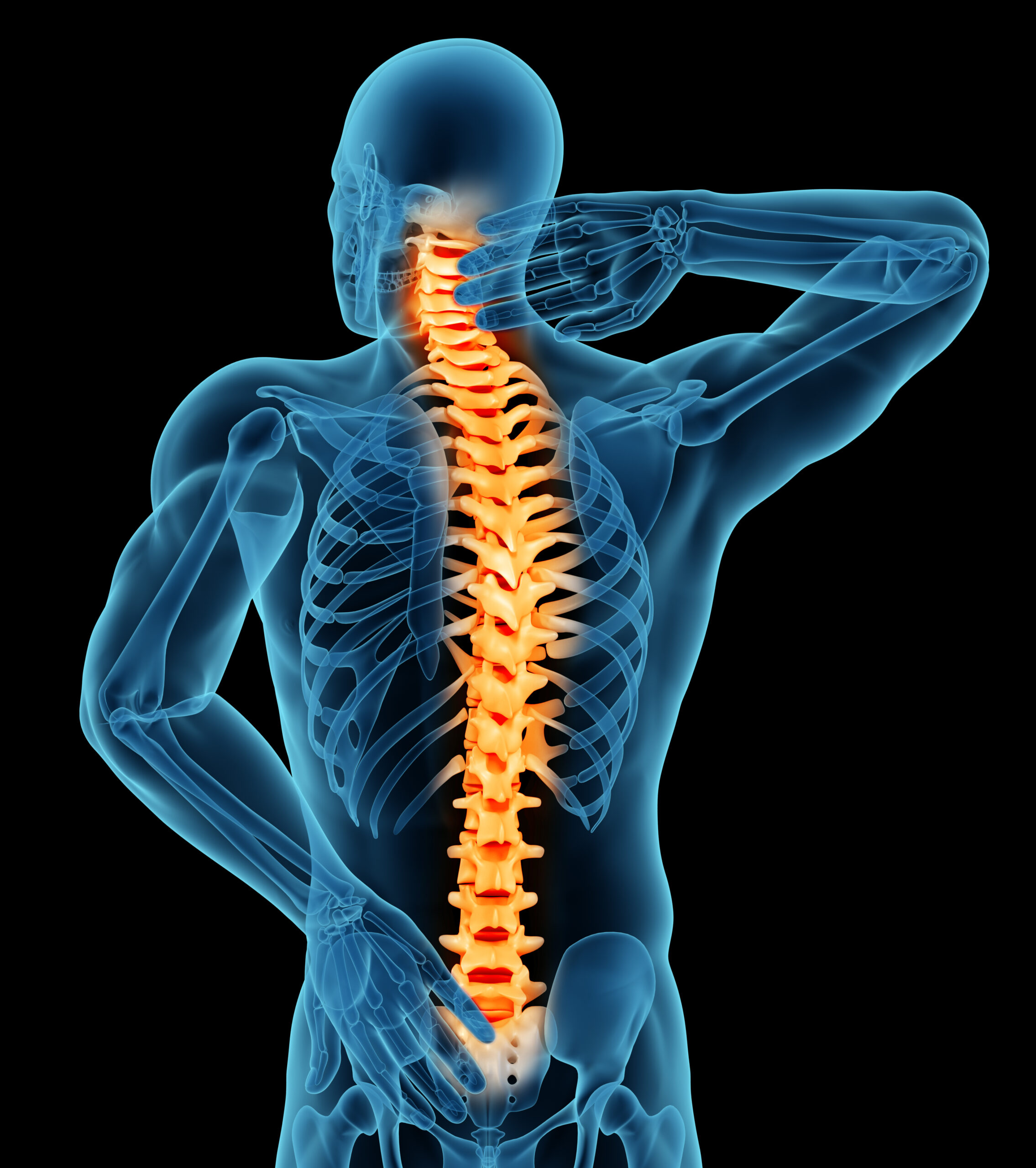
Support for Pain, Posture, Strength & Long-Term Confidence
Living with scoliosis can feel confusing. You may have been told to “just watch it,” pushed toward one treatment option, or left trying to figure it out on your own.
Whether you’re a parent looking for answers for your teen, or an adult dealing with pain, stiffness, posture changes, or worsening symptoms, the right support can make a meaningful difference.
At Momentum Health, we offer a collaborative approach to scoliosis care. That may include physiotherapy, chiropractic care, massage therapy, or scoliosis-specific treatment using the Schroth Method. Our goal is simple: help you move better, feel stronger, and understand your next steps with confidence.
What Is Scoliosis?
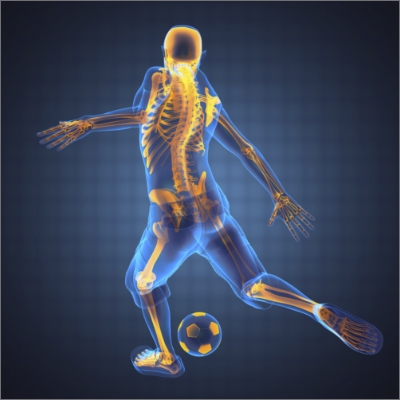
Scoliosis is a curvature of the spine that involves loss of typical angles of the spine, followed by lateral curvature and rotation. While many people picture scoliosis as something only teenagers experience, it is a lifelong condition that affects adolescents and adults.
Some curves remain mild and stable. Others may create discomfort, movement limitations, muscle imbalance, or progression over time.
Scoliosis may be:
- Idiopathic scoliosis – the most common type, often identified during adolescence
- Degenerative scoliosis – more common in adults as the spine changes with age
- Neuromuscular or structural scoliosis – related to other health conditions or spinal changes
Every spine is different, which is why personalized assessment matters.
Common Signs and Symptoms of Scoliosis
Some people have no pain at all. Others notice symptoms gradually over time.
Common concerns include:
- Uneven shoulders or hips
- One side of the ribcage more prominent than the other
- Back pain or fatigue with standing or sitting
- Muscle tightness or recurring tension
- Nerve symptoms like numbness or tingling
- Reduced flexibility or stiffness
- Difficulty with posture
- Pain during exercise or daily activity
- Breathing restrictions in more significant curves
- Changes that seem to be progressing over time
If you’re noticing these symptoms, an assessment can help clarify what’s happening and what care may help.
How We Assess Scoliosis
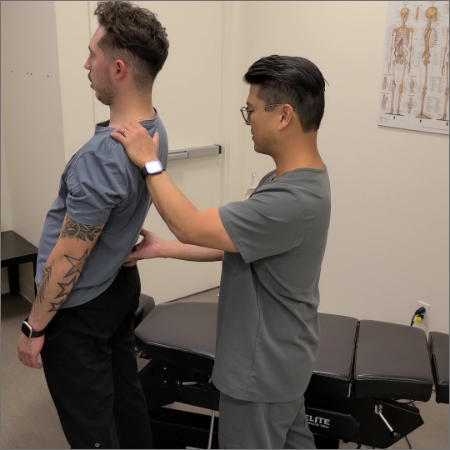
A scoliosis assessment is about more than measuring a curve. We look at how your body functions as a whole.
Your clinician may assess:
- Posture and alignment
- Degree of rotation
- Leg length and overall height
- Range of motion
- Strength and endurance
- Balance and movement patterns
- Breathing mechanics
- Pain triggers and daily limitations
- Previous imaging or medical history
- Goals for sport, work, parenting, or daily life
Assessment always starts with understanding your full scoliosis story and experience. From there, we help guide you toward the right care plan.
From there, we help guide you toward the right care plan.
Scoliosis Treatment Options at Momentum Health
Not every person with scoliosis needs the same treatment. Some benefit from general multidisciplinary care. Others may need a more scoliosis-specific program. Many benefit from a combination of both.
Physiotherapy for Scoliosis
Physiotherapy can help improve strength, movement quality, body awareness, and confidence.
Treatment may include:
- Customized exercises
- Core and postural strength training
- Mobility work
- Balance and coordination training
- Pain management strategies
- Return-to-sport or activity planning
Whether you have mild, moderate or severe scoliosis, physiotherapy can be an excellent starting point on learning to manage your condition.
The Schroth Method for Scoliosis
The Schroth Method is a specialized physiotherapy approach designed specifically for scoliosis. It uses customized exercises based on your curve pattern to improve posture, muscular balance, breathing mechanics, and spinal awareness.
Schroth treatment may help with:
- Curve-specific posture correction
- Strength and endurance
- Breathing efficiency
- Improved symmetry and body awareness
- Pain reduction
- Confidence with movement
- Managing progression concerns
Schroth can be appropriate for adolescents, adults, and a wide range of curve presentations.
If you’re unsure whether you need general care or a Schroth-specific program, we can help guide you.
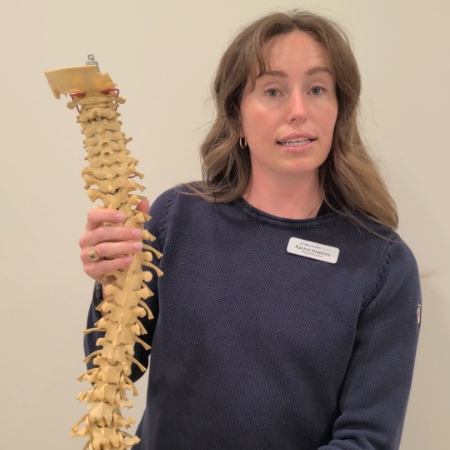
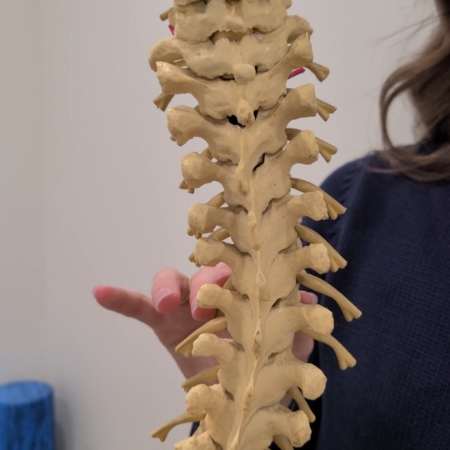
Learning scoliosis-specific posture corrections and exercises tailored to my curve as a young adult was incredibly empowering. After years of feeling self-conscious about the condition and not knowing the proper way to exercise or improve my posture, I felt much more in control and hopeful about managing my scoliosis.
It has been quite a journey, and along the way, my clients have continually inspired me. Being able to provide others with these management tools and feel more empowered in their bodies has been one of the most rewarding parts of my work.
Chiropractic Care for Scoliosis
Chiropractic care may help improve joint mobility, reduce stiffness, and support better movement mechanics.
While chiropractic care does not “straighten” scoliosis, it can be helpful for managing discomfort, restoring mobility, and reducing strain caused by compensation patterns.
This can be especially valuable for adults dealing with recurring back or neck tension.
Massage Therapy for Scoliosis
Scoliosis often creates muscular asymmetry, where some muscles work too hard while others become weak or underused.
Massage therapy can help by:
- Reducing tension
- Improving circulation
- Decreasing soreness
- Supporting recovery after exercise
- Helping you feel more comfortable in your body
Massage is often most effective when combined with active rehabilitation.
Why a Multidisciplinary Approach Matters
Scoliosis is not just about the spine. It can affect muscles, joints, breathing patterns, energy levels, and confidence.
That’s why many patients do best with coordinated care. Instead of relying on one tool, we can combine the right services at the right time.
Your plan might include:
- Physiotherapy for strength and exercise progression
- Chiropractic care for mobility
- Massage therapy for tension relief
- Schroth treatment for curve-specific retraining
- The right plan depends on you.
Meet Our Schroth Clinicians
Specialized scoliosis care is available through our Schroth-certified clinicians at Momentum Health:

Janny Hineman
BMRPT, Certified Schroth Therapist

Rachel Hawkins
MPT, BKin (Honours), Certified Schroth Scoliosis Therapist
If scoliosis or kyphosis specific treatment is the best fit, our team can help connect you with the right provider.
Frequently Asked Questions
Can scoliosis be treated without surgery?
Many people with scoliosis are managed successfully without surgery. Conservative care may include exercise, physiotherapy, symptom management, and scoliosis-specific treatment such as Schroth.
Can adults get treatment for scoliosis?
Absolutely. Many adults seek care for pain, stiffness, posture changes, or progression concerns. Treatment can help improve comfort and function at any age.
Does chiropractic fix scoliosis?
Chiropractic care does not “cure” scoliosis, but it may help reduce pain, improve mobility, and support better movement.
Is massage good for scoliosis?
Massage can be very helpful for muscle tension, soreness, and comfort — especially when paired with active rehab.
How do I know if I need the Schroth Method?
That depends on your goals, curve type, symptoms, and history. A proper assessment can help determine whether general care or advanced treatment is the best next step.
Do I need x-rays before my first appointment?
We ask that when booking your first Schroth-based appointment that you have up to date x-rays. For adolescents, please have an x-ray within the past 3-6 months; adults, within the past 5 years. If you need to get a new up to date x-ray before your assessment please request from your family doctor a requisition to get a “Full spine AP and lateral view”. This can only be done at the Children’s hospital or Foothills hospital. You do not need to bring in a copy of your x-ray if it was done in Alberta.
What should I wear to my Schroth appointment?
For the physical assessment we will ask everyone to have shorts with them. If you forget them, no worries we have extra here. For girls/women it is helpful to wear a sports bra that is not a racerback.
How many sessions is a full Schroth program typically?
Although your treatment is individualized in terms of exercises and treatment, Schroth is very evidence-based and standardized in timeline. Most people will have one assessment and 8 follow-up treatments in a 6 week period.
How many sessions are needed for the Schroth program?
Typically, 6–10 sessions are needed to learn the basic set of exercises and develop the ability to maintain postural corrections specific to your curve(s). The number of sessions may vary depending on factors such as pain, body awareness, physical fitness, adherence to the program, and the need for monitoring. These sessions are usually completed within 6–12 weeks, depending on the recommended program intensity.
After the initial sessions are completed, follow-up sessions every 2–6 months are often recommended for ongoing support, monitoring, and exercise progression, as appropriate.
What should be worn during sessions?
The physiotherapist needs to be able to clearly see your spine and postural compensations during the evaluation and sessions. For women and girls, a bra, sports bra (not racerback), bathing suit top, or a tighter-fitting tank top is recommended. Shorts or comfortable, more snug-fitting pants are also recommended. If you forget shorts, no worries—we have extras available.
Do I need x-rays before my first appointment?
We ask that you have up-to-date X-rays when booking your first appointment. For adolescents, please have an X-ray taken within the past 3–6 months. For adults, X-rays within the past 5 years are recommended. If you need updated X-rays before your assessment, please request a requisition from your family doctor for a standing scoliosis series with a “Full Spine AP View” for adolescents or a “Full Spine AP and Lateral View” for adults.
This can only be done at the Alberta Children’s Hospital or Foothills Medical Centre – McCaig Tower. Both locations accept walk-ins for scoliosis imaging with your requisition. McCaig Tower hours of operation are Monday–Friday from 7:30 a.m.–3:00 p.m., and the Children’s Hospital hours are Monday–Friday from 8:00 a.m.–4:00 p.m. You do not need to bring a copy of your X-rays if they were completed in Alberta.
Take the First Step
You don’t need to figure this out alone. Whether you’re newly diagnosed, managing symptoms for years, or looking for a better plan, we’re here to help.
Book a scoliosis assessment today and let’s build the right path forward together.