
What is Frozen Shoulder?

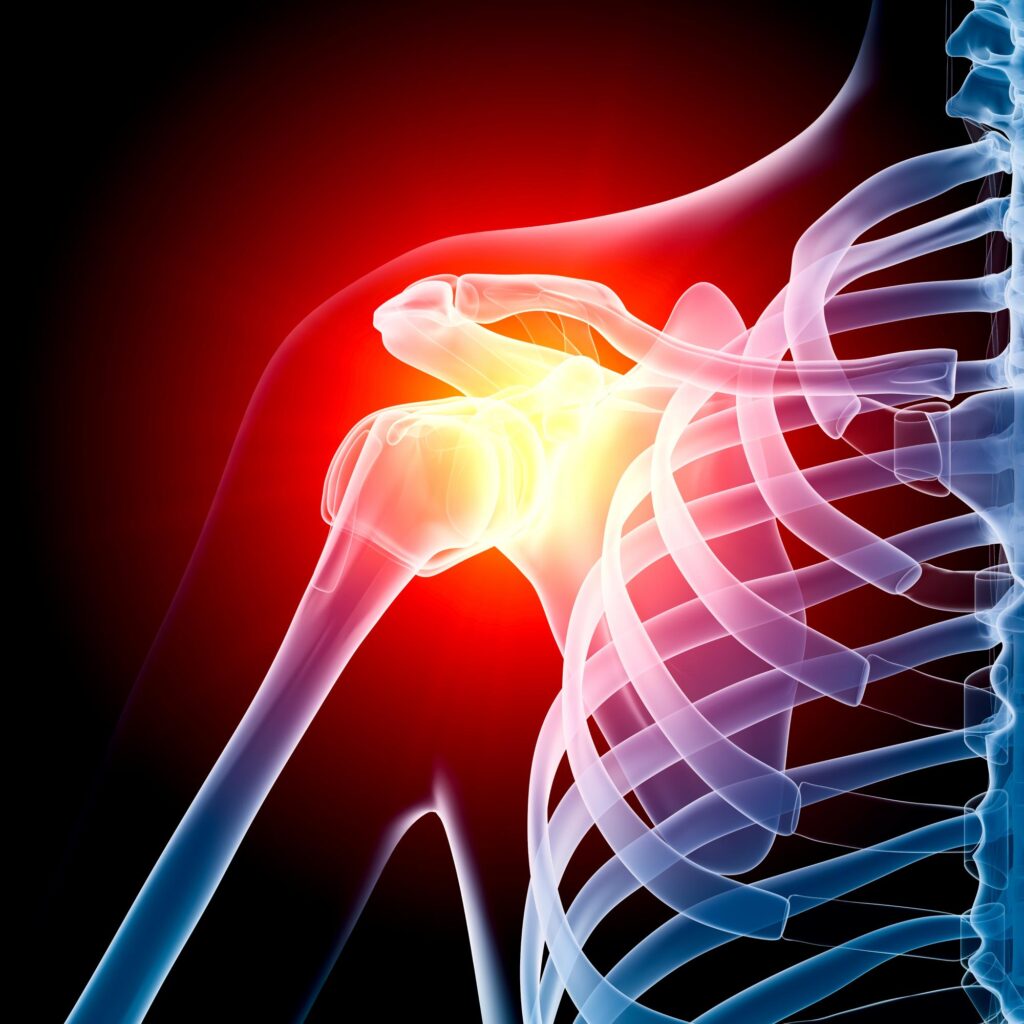
What is frozen shoulder?
Frozen Shoulder Syndrome (FSS) typically presents in patients ranging in age from 40-60 years of age. It tends to affect women more than men. Many other factors can impact this condition, such as diabetes and hypothyroid conditions.
FSS is generally defined as a progressive or sudden loss of both Active and Passive Range of Motion (ROM) in the shoulder. The loss is due to pain and stiffness and often of idiopathic origin (nobody knows why) with insidious onset (out of nowhere).
Patients tend to have difficulty sleeping and experience pain in the upper 1/3 of the arm. Typically, patients are only able to achieve less than 120 degrees abduction and flexion, are unable to reach behind own back (internal rotation), and their external rotation is limited to near zero (pathognomonic). The initial freezing stage is often horribly disruptive and makes things like washing, grooming and getting dressed difficult, painful and sometimes, impossible.
A similar condition that your practitioner will screen for is Impingement Syndrome. While the same mechanism may be present, to differentiate a person with FSS from Impingement Syndrome, there should be ROM loss in other ranges than just Abduction. In other words, FSS will affect your ability to move in more than just one direction.
Most cases of FSS can resolve in 18 months to 3 years. That’s a long time to wait! Worse yet, in the two studies I was able to find, at 7 years and 10 years post-recovery, upwards of 50% of the patients had reduced ROM and upwards of 10% had ongoing functional deficiencies. So it never really recovered fully!
Traditional treatments of FSS include NSAIDS (painkillers and antinflamatories) and even corticosteroid injections. Many studies have demonstrated the negative effects of steroid injections in general. Generally, corticosteroids showed moderate to significant improvement – for a short period of time. This is very much an instance of masking the pain, but not correcting the cause of the pain, with a lot of potential for side effects.
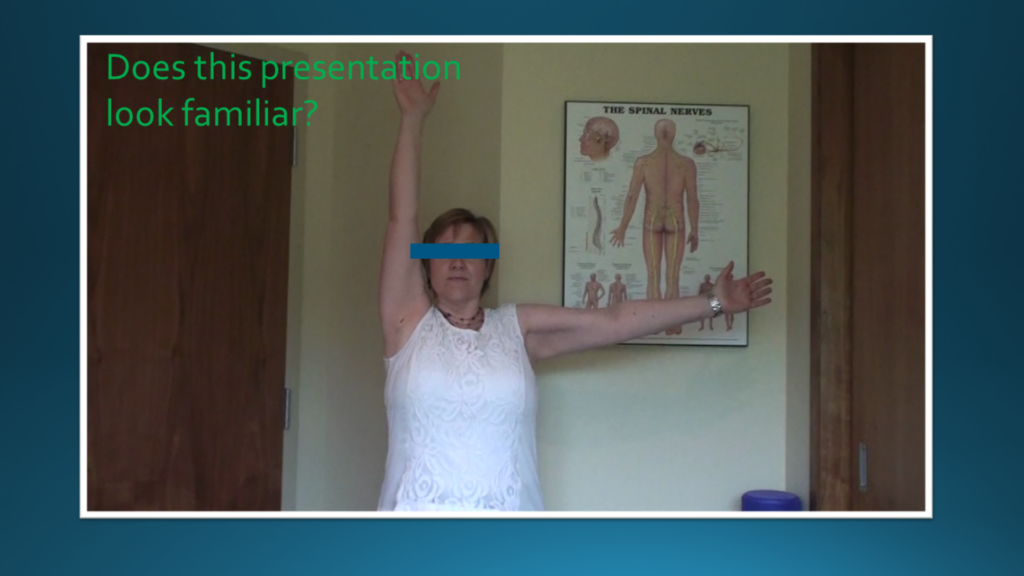
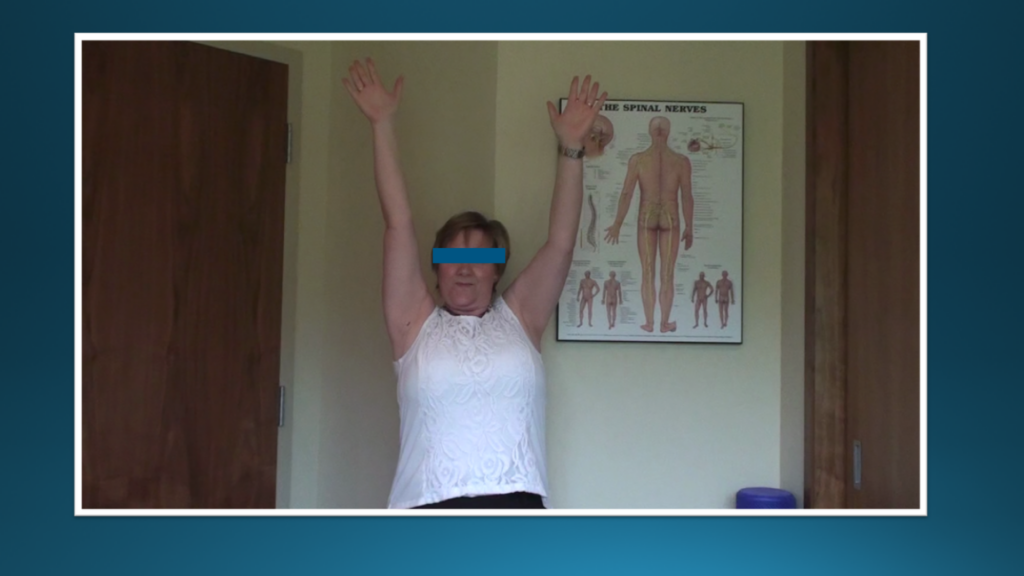
The treatment I employ at Momentum Health Westbrook targets the cervical spine and the Spinal Accessory Nerve to restore function quickly and sometimes dramatically. These two images are before adjustment and after adjustment.
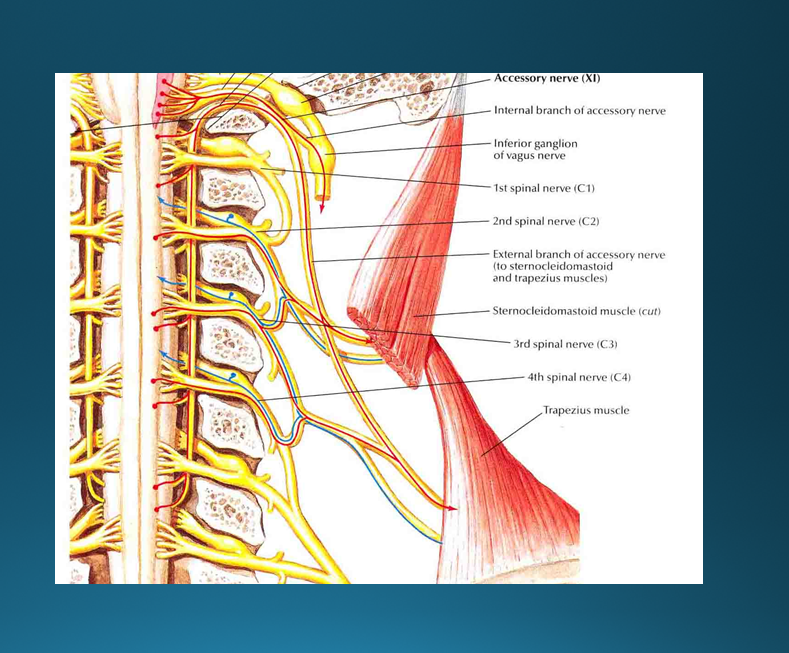
How does this work? A shoulder is an inherently unstable joint and requires a tremendous amount of control for it to function properly. Let me present two analogies that I think work rather well.
1) Computers. They all have operating systems that spring into action when you turn the computer on. When your operating system is working properly you can run programs (excel, word, internet browsers, games) on that computer without issue. The spinal accessory nerve, like the operating system, helps create the stable background the programs run on. The shoulder’s program is to throw a ball, or reach a cup on the top shelf. When it isn’t operating properly, the programs freeze up, or don’t operate properly causing real problems and eventually…The blue screen of death. FSS is just like that. The shoulder is so badly inflamed and damaged from improper operation, that it freezes up.
2) A symphony orchestra. An orchestra is made up of many musicians. Just like each musician plays a different instrument, each muscle in your shoulder performs a different action. When the musicians are all in harmony the sounds they create are beautiful. When they are not, it can get downright painful. Same thing with a shoulder. The spinal accessory nerve functions like the conductor by helping all the musicians work together harmoniously. If they are not performing properly, even mundane normal tasks become painful, create inflammation and eventually lead to other changes consistent with adhesive capsulitis, or FSS.
By allowing the nerves to work properly, we restore the operating system/conductor and the effects, as you see above, can be impressive. Even when a patient has a great initial result, the work is not typically done. As the neurological control of the shoulder improves we introduce progressive home exercise and physiotherapy. From our experience in the clinic, with hundreds of patients, these physiotherapy-based exercises and modalities become more effective when administered collaboratively with the new neurologically focused chiropractic techniques. As a result, even though FSS is notoriously difficult to treat, we are usually able to generate positive results for patients, even if they have not found success elsewhere.
In an effort to better understand the condition, we measure and track each patients progress at each visit. We are able to objectively, accurately and quickly measure the results of each treatment with specialized cameras that measure shoulder ROM to the 1/100th of a degree. This allows us to also give the patient clear information about how effective the treatments are and allows us to tailor treatment plans based on objective results. If a patient consents, this treatment data can also be pooled for research.
These new neurological techniques are showing great promise in the treatment of Frozen Shoulder and offering some new insight into the underlying cause of this mysterious condition. At Momentum Health we are proud to be able to help patients and potentially contribute to a better understanding of this insidious and debilitating syndrome. If you, or someone you know, is suffering from a frozen shoulder, we are ready and excited to help!
- Written by Dr. Denis Simons, DC, BSc

Dr. Denis Simons, Chiropractor, Clinic Director
DC, BSc.
Dr. Denis Simons graduated from Western States Chiropractic College in Portland, Oregon in March of 2000, where he received several awards of distinction. Dr. Simons moved to Calgary in the spring of 2000. He owned and operated Penny Lane Chiropractic and Health in the downtown core from 2001 until 2006, when he joined the Advantage Health group of clinics. An avid and once competitive skier, Dr. Simons spent many years as a volunteer on the Lake Louise Ski Patrol and competed in several Big Mountain Competitions. For several years he enjoyed the opportunity to work and travel with the Canadian National Snowboarding team, treating several Olympic medalists along the way. His reputation consistently has travelling musicians and athletes requesting treatments as their travels bring them through Calgary. Dr. Simons continually attends seminars and courses to make sure he has the most current and relevant information and techniques. As a diversified chiropractic practitioner, he utilizes manual chiropractic adjusting techniques, home exercise, and various soft tissue and stretching techniques to help his patients achieve their healthcare and wellness goals. Being a part of the multi-disciplinary team at Momentum Health allows him to refer and co-treat with physiotherapists, registered massage therapists, acupuncturists, naturopathic doctors and psychologists. As an OTZ trained chiropractor, Dr. Denis Simons utilizes new, groundbreaking chiropractic treatments for Frozen Shoulder Syndrome (aka Adhesive Capsulitis). This new treatment approach is providing sufferers of FSS often immediate and dramatic results. If you would like to learn more about this condition, or see actual patient before and after video, please visit https://drdenissimons.com