


HIKING AND CAMPING, OUTDOORS! OH MY!
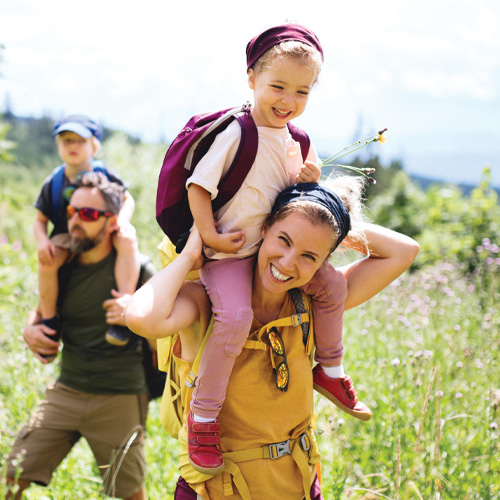
Hiking Season Is Here. Are Your Arthritic Knees Ready?
By Mark Taylor, MScPT — Momentum Health Deerfoot
Every year I seem to have the same conversation.
A patient comes in, somewhere between frustrated and hopeful, and tells me they want to get back on the trails. Maybe it’s a loop in Kananaskis they’ve done for years. Maybe it’s something they’ve been eyeing for a while and haven’t quite committed to. Their knees have been an issue — not enough to stop them entirely, but enough to make them hesitate. Enough to make them wonder whether the trails are still something they get to have, and what they need to consider before getting outdoors for the first time.
That hesitation is what I want to talk about.
Living with hip or knee arthritis in Calgary means living alongside one of the most outdoor-active cities in the country. There are no shortage of reminders that the mountains are right there – the summer trail culture, the running groups, the families loading up gear on a Friday afternoon – it can make joint pain feel isolating in a way that goes beyond the physical.
What most people don’t realize is that movement is not the enemy. For most people living with osteoarthritis, the right kind of movement is part of the answer.
I’ve been a Physiotherapist at Momentum Health Deerfoot since we opened in 2021, and I’m GLA:D certified — which means I’ve spent a lot of time working specifically with people navigating hip and knee arthritis. GLA:D stands for Good Life with osteoArthritis from Denmark, and it’s an evidence-based program developed to address exactly this gap: the space between “your arthritis is real” and “here’s what you can actually do about it.”
The program runs over seven weeks. It combines education about what osteoarthritis actually is and isn’t, risk factors and treatment options, with a structured neuromuscular exercise program focusing on the knees, hips, back and core muscles. The exercise component is delivered by our experienced kinesiology team, and the research behind it is consistent: participants finish with less pain, improved function (think walking ability!), and more confidence in what their body can do.
That last part is the one I care most about.
Arthritis is as much a confidence problem as it is a physical one. People stop trusting their joints. They modify, accommodate, and avoid — and the avoidance creates its own problems, because deconditioning makes everything worse. The GLA:D program works in part because it gives people a structured, supervised reason to move when moving feels scary. The fear decreases as the body gets stronger. That’s not a theory – this is what I watch happen.
For anyone thinking about hiking this summer, here’s what I want you to know: the goal isn’t to push through pain. The goal is to build the capacity so that the hike doesn’t produce pain in the first place.
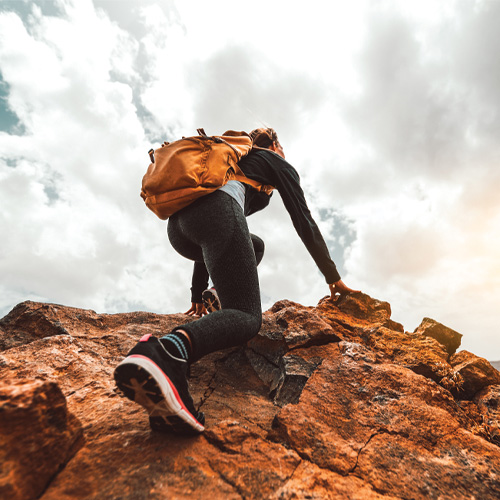
That means quad strength, because your quads control how your knee loads on every downhill step. It means hip stability, because a hip that isn’t holding its position transfers stress to the knee below it. It means knowing how to pace yourself and what to do when things start to talk to you mid-trail.
None of that is complicated. It just requires someone to help you build it systematically.
If you’ve been managing your knees quietly and hoping summer works out, that’s not a plan. Come in before the season gets away from you. We can figure out where you are and what it would take to get you where you want to be.
Follow Us on Social Media!
Colin’s Advice for Hiking
By Colin Johnston, DC — Momentum Health Mahogany
Every year I seem to have the same conversation.
I’ve hiked a lot of mountains.
Berg Lake. Kilimanjaro West Coast Trail. Most weekends, I’m in the Rockies with my dog, Ronan, who has strong opinions about pace and very little patience for rest breaks. This summer it’s the West Coast Trail. I’ve also spent a fair amount of time giving talks on hiking injury prevention — with MEC, CORE, The Ramblers, and the Calgary Alpine Club — which means I’ve had years of practice answering the questions.
So here’s what I know.
The injuries I see most often aren’t dramatic. Nobody comes into my office with a story about a sudden snap or a dramatic fall. They come in stiff, sore, and genuinely confused — because they felt completely fine on the way up.
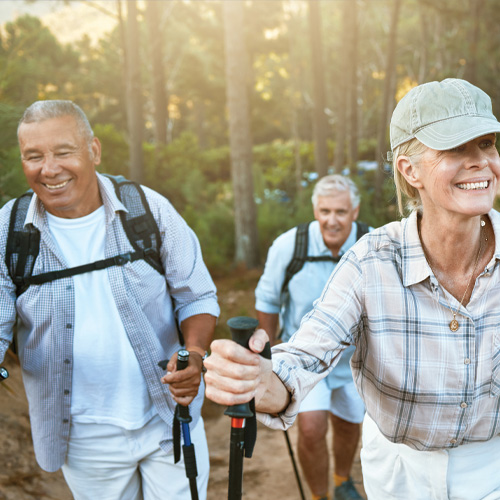
The descent is where most injuries occur.
Going downhill loads your knees at three to four times your body weight with every step. If your quads aren’t strong enough to control that load, your joints absorb it instead. Add a heavy pack, tired legs, and overconfidence that comes after a beautiful summit, and you have a reliable recipe for a week of regret.
Here’s what I tell people before the season starts:
- Train the downhill before you go. Most people prepare for hikes by walking flat terrain or doing stairs going up. Descending is a different movement pattern entirely. Step-downs, eccentric squats, and decline walking build the quad control you actually need on trail. Start four to six weeks before your first big day out.
- Your pack fit matters more than you think. A pack that sits wrong changes how you move on every single step of the day. Hip belt first, then shoulder straps, then sternum strap. The hip belt belongs on your hip bones, not your waist. Any good outdoor retailer in Calgary will check your fit at no charge — use that service.
- Use poles on the descent. They meaningfully reduce the load through your knees going downhill. Plant them ahead of you, not beside you, and let them share the work.
- Check your footwear before the season, not after. Worn-out soles and poor ankle support create a compensation chain that usually ends up expressing itself in your knee, hip, or low back by mid-hike. If your boots are more than a few seasons old, it’s worth a look now.
- Know the difference between fatigue and injury. Tired muscles ache through the whole area and ease as you warm up. Injured structures hurt in a specific place, sometimes sharply, and don’t improve. If something hurts on the way up, don’t negotiate with it on the way down.
The whole point of these talks — and honestly, the whole point of my practice — is getting people onto the trails they love and back home without consequence. That’s a more interesting conversation than treating something that didn’t have to happen.
If your body has been sending signals you’ve been putting off, come in before the summer gets away from you. Book in with me at Momentum Health Mahogany by phone or online
Dr. Johnston and Ronan will be out in the mountains. You should be somewhere you love too.
Meet the Deerfoot GLA:D Team
Mark Taylor, MScPT & Alexis Shiels, BKin — Momentum Health Deerfoot


Mark Taylor, MScPT
Raised in Calgary, Mark completed his MScPT at the University of Alberta after attending Mount Royal University. Since opening with Momentum Health Deerfoot in 2021, he has helped patients overcome orthopedic injuries and persistent pain.
GLA:D certified for hip and knee arthritis, Mark also has advanced training in functional dry needling, orthopedic manual therapy, TMJ management and neurokinetic therapy. He has a special interest in TMJ dysfunction, shoulder pain and spinal conditions, and collaborates with the physiatrists at Kinesis Medical Centre to improve access to care.
Outside the clinic, Mark enjoys umpiring softball, curling and cheering on the Flames and Blue Jays.


Alexis Shiels, BKin
Originally from Saskatchewan, Alexis discovered her passion for rehabilitation through volleyball, coaching and working as a physiotherapy assistant. She earned her Bachelor of Kinesiology from the University of Alberta.
Alexis leads the exercise component of the GLA:D program, helping patients build confidence, strength and movement while working closely with Mark’s clinical oversight.
When she’s not at work, Alexis enjoys hiking in the Rockies, camping and hot yoga.
Better Together
Together, Mark and Alexis combine clinical expertise with movement coaching to provide a comprehensive GLA:D experience for people living with hip and knee arthritis. Their shared goal is helping every patient move better, feel stronger and get back to the activities they love.
📅 Book at Momentum Health Deerfoot403-228-7968
Custom Bracing Explained:
Knee Braces, ACL Support & Arthritis Pain Relief
Welcome to Our Newest Staff Members!
Arianna Boehm National Spine RMT,
Samani Bhusumane Deerfoot PT,
Eden Fehr Creekside RMT,

Community Corner: Supporting Every Step of the Kidney March
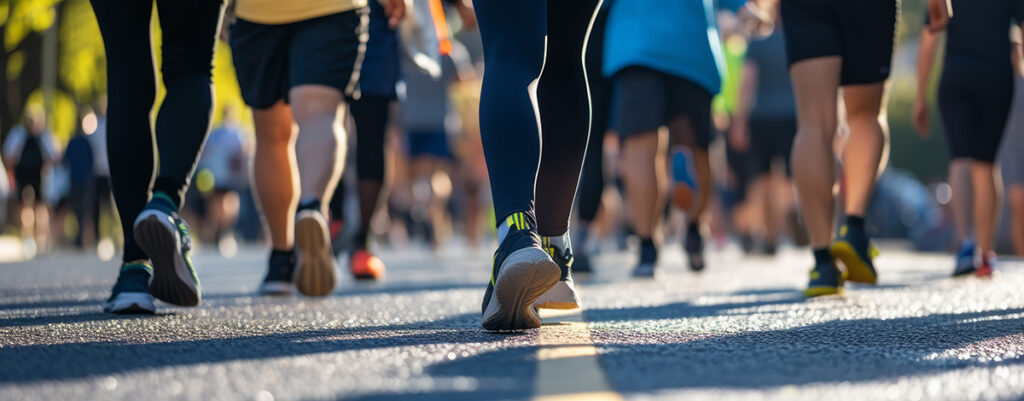
This summer, Momentum Health is proud to support the Kidney March, an incredible event that brings people together to raise funds and awareness for kidney health.
Our own Dr. Josip and Dr. Lisa will be on-site helping participants prepare for and complete the challenging 100 km walk. From offering guidance on movement and recovery to helping walkers stay strong throughout the event, Momentum Health is honoured to support walkers through every step of their journey.
We’re inspired by the dedication of everyone taking part in this meaningful cause and wish all participants the very best as they make their 100 km walk a reality. Good luck, and thank you for making a difference in the lives of Canadians affected by kidney disease!
Event Details:
100KM Kidney March
September 11-13, 2026
Calgary, Alberta
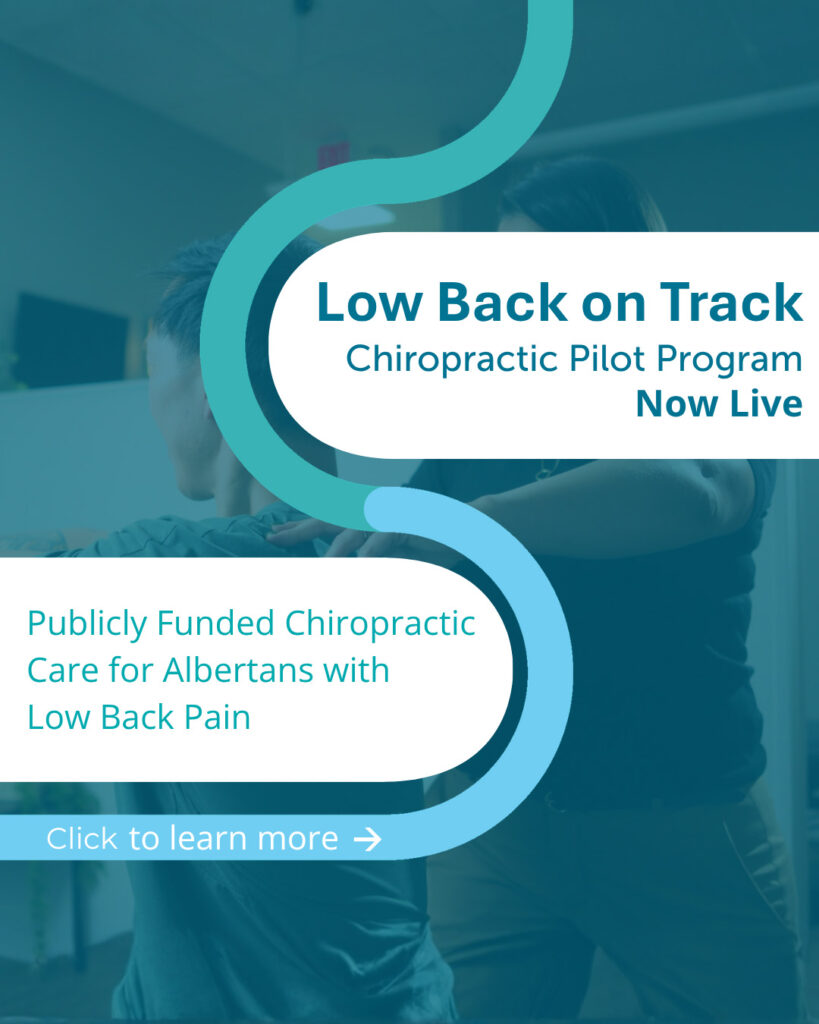
Chiropractic Pilot Program. Now Live!
The Low Back on Track pilot program is now live in northwest Calgary and Red Deer.
This publicly funded program gives eligible adults up to eight chiropractic visits over 90 days at no cost, helping people access early, evidence‑based care for persistent or recurring low back pain.
If you or someone you know has been struggling with low back pain, this program may be a great fit.
Schedule Your Appointment Today!
If you’re ready to make meaningful changes that actually last, scheduling an appointment with Momentum Health is the perfect place to start. Our team is here to help you move better, feel stronger, and build healthier habits all year long.
Healthy Recipe: Perfect Grab-and-Go Hiking Power Wrap
Fuel your next hike with something simple, satisfying, and easy to take on the go. This Black Bean & Avocado Wrap is packed with plant-based protein, fibre, and healthy fats to keep your energy steady on the trail. With a hint of cumin for warm, earthy flavour, it’s a great option for supporting an active lifestyle while being gentle on your joints.
- 1 can (15 oz) black beans, drained and rinsed
- 1 ripe avocado
- 1/2 cup corn (fresh, canned, or thawed frozen)
- 1/4 cup red bell pepper, diced
- 1/4 cup red onion, finely chopped
- 1 tbsp lime juice
- 1 tbsp olive oil
- 1/2 tsp ground cumin
- 1/4 tsp garlic powder
- Salt and pepper, to taste
- 2 large whole grain tortillas or wraps
- Optional: handful of spinach or mixed greens
- Optional: lime wedges
- Optional: pumpkin seeds or sunflower seeds
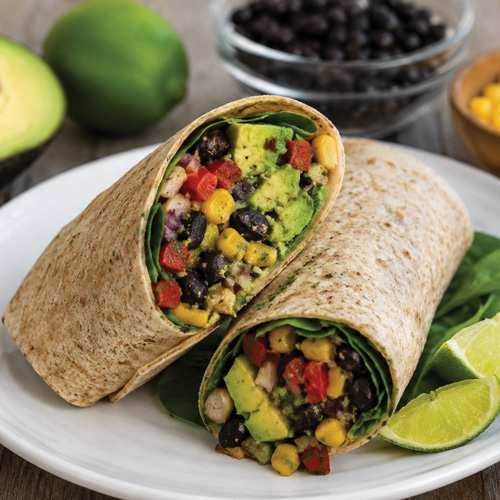
How to Assemble
- Prepare the Filling
In a medium bowl, mash the avocado slightly, leaving some chunks for texture. Add the black beans, corn, red bell pepper, and red onion. - Season
Stir in lime juice, olive oil, cumin, garlic powder, salt, and pepper. Mix until well combined. - Assemble the Wraps
Lay tortillas flat and add a layer of spinach or greens if using. Spoon the black bean and avocado mixture evenly onto each wrap. - Wrap and Serve
Fold in the sides and roll tightly into a wrap. Slice in half if desired.
Serving Suggestions
- Wrap in parchment or foil for an easy grab-and-go hiking meal
- Pair with fresh fruit or a handful of nuts for a balanced snack
- Use a whole grain or high-fibre wrap to support sustained energy
- Add a squeeze of extra lime juice to help keep the avocado fresher longer while on the trail
- Add shelf-stable extras like pumpkin seeds or sunflower seeds for a boost of crunch and nutrients