


Hearts and Blades: Celebrate Valentine’s Day with Graceful Glides and Injury-Free Fun

If you’re looking for a fun, romantic outing this Valentine’s Day, consider ice skating! It’s easily the most romantic of winter sports, one where you can cozy up with your loved one or, for those more competitive-minded souls, race to your heart’s content!
But while ice skating can be enchanting, it does come with a risk of injury–especially if it’s been a while since you laced up your boots. Today, Momentum Health wants to share some of the typical ice skating injuries we see at our clinic and provide simple tips to help prevent them.
That way, you can spend the season focused on what matters: spending time with (or competing against) your valentine.
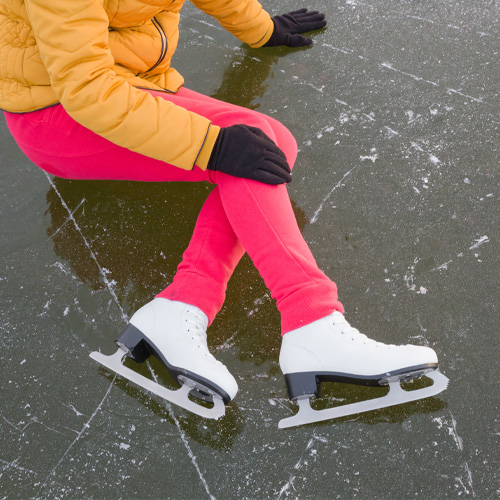
Ice Skating Injuries to Watch Out For
Wrist Sprains or Fractures
- If you stumble on the ice, you’re likely to stretch out your arm to break your fall, making your wrists vulnerable to sprains (a tearing of the ligaments) or fractures (a break in the bone).
Ankle Sprains
- Skates don’t always offer enough ankle support, making you more likely to twist your ankle on the ice.
Muscle Strains
- Overexerting yourself or failing to warm up properly can strain muscles in the legs or back.
Knee injuries
- Sudden stops, turns, or awkward landings can damage the ligaments or menisci in your knees.
Head injuries
- Falls, especially backward ones, can result in concussions or other head trauma.
Five Prevention Tips To Keep You Safe on the Ice
Ice skating may be fun, but it’s also a full-body activity that demands balance, strength, and coordination. It’s important to treat it as you would any other sport.
Fortunately, taking a few precautions can significantly reduce your risk of injury while enjoying the ice. Here are some practical tips from our team:
1. Don’t Skip Your Warm Up
- Before you really get going, take ten minutes to perform some light cardio (on or off the ice, depending on your experience level). This ensures your muscles are warmed up and ready for the demands of skating. If you aren’t sure which warmups to perform, our team can help!
2. Wear Proper Gear
- Ensure your skates fit well and are laced up properly in order to provide adequate ankle support, reducing the risk of ankle sprains. Wrist guards and knee pads can help protect against the other common ice-skating injuries we see. We also recommend that all skaters wear helmets, regardless of your experience level.
3. Make Sure to Use Proper Technique
- Never skated before? First time back after a long time away? We suggest making an appointment to review the proper skating form and technique to help minimize your injury risk. Even experienced skaters can benefit from a biomechanical assessment to address any awkward postures or movements that might cause issues!
4. Check the Ice Conditions
- Nothing beats outdoor skating, especially on Valentine’s Day–the fresh air and gorgeous scenery can really elevate the romance! However, it’s important that you choose areas that are smooth and free of cracks or other debris. If you’re skating at a rink, avoid busy times, which can help you avoid collisions.
5. Skate at Your Skill Level
- As tempting as it may be to try and impress your date with some high-flying moves, you’re much better off sticking to the techniques and speeds you’re most comfortable with. That way, you won’t have to spend Valentine’s Day in the emergency room!
Want to Get in Peak Ice Skating Shape? Momentum Health is Here to Help
Whether you’re an experienced skater looking to improve your performance or a newbie who wants to avoid injury, our clinicians are here to help! We can assess your strength, mobility, posture, and more and provide personalized suggestions to address any impairments.
We’re also available if you do suffer an injury on the ice. Our multidisciplinary team works collaboratively to address every aspect of your injury, from managing pain to rebuilding strength and preventing future issues.
This Valentine’s Day, don’t let the risk of an injury keep you from enjoying the ice. With a little preparation and the right care, you can glide gracefully and safely with your valentine.
Call us today to get started!
Written by Alisha Mohamed-Kassam

Want To Learn More? Schedule An Appointment!
Need help turning these tips into action? Our multidisciplinary team at Momentum Health can provide personalized guidance for you and your family. From improving posture to increasing physical activity, we’re here to support your overall well-being. Schedule an appointment today!

Clinician Spotlight
Alisha Mohamed-Kassam, Clinic Director, MPT, IMS Certified, Biomedical Dry Needling
This month, we’re thrilled to spotlight Alisha Mohamed-Kassam, Clinic Director and physiotherapist, who has been away from Ogden for a very good reason – the newest addition to the family!
We’re thrilled to welcome back Alisha after her maternity leave. As a Physiotherapist with 12 years of experience, Alisha has spent the past decade dedicated to Momentum Health Ogden. Her expertise spans rehabilitation for vehicle collisions (MVA), work-related (WCB) cases, and individualized treatment plans tailored to your unique needs. Alisha brings her expertise and warmth back to our team, ready to continue providing exceptional patient care. Her passion for physiotherapy and dedication to improving lives make a real difference to her patients.
Outside the clinic, Alisha loves spending time with her family in a wide variety of winter activities, traveling, and enjoying all things Taylor Swift!
Perfect Your Clamshell Exercise for Stronger Hips & Knees
Struggling with recurring hip or knee pain? The clamshell exercise is a go-to for many, but are you doing it correctly? In this video, Adam Hepburn, PT, Clinic Director at Momentum Health Seton explains how small adjustments in form can make a big difference in targeting the right muscles. Learn how to engage your posterior hip muscles effectively while avoiding common mistakes that can limit your progress. Watch now to improve strength, restore balance, and reduce tension—helping you move and feel better every day!
Follow Us on Social Media!
Community Corner: From Bump to Baby & Beyond
Join us at the upcoming Mommy Connections event at the Acadia Community Association (in the rec centre) on March 8th from 10-2.


Seasonal Recipe: Easy Red Velvet Cheesecake Bars
Indulge in the perfect blend of rich cocoa and creamy cheesecake with these Red Velvet Cheesecake Bars! Their striking marbled design and irresistibly soft texture make them the ultimate Valentine’s Day treat—whether you’re sharing with loved ones or savoring them yourself. ❤️
Ingredients:
Red Velvet Layer:
- 1 1/2 cups all-purpose flour
- 1/4 cup cocoa powder
- 1/2 tsp baking powder
- 1/2 cup melted butter
- 1 cup sugar
- 2 eggs
- 1 tsp vanilla
- 1 tbsp red food coloring
Cheesecake Layer:
- 8 oz cream cheese, softened
- 1/3 cup sugar
- 1 egg
- 1 tsp vanilla

Instructions:
- Preheat and Prepare Pan:
Preheat oven to 350°F (175°C). Grease and line an 8×8-inch pan. - Make Red Velvet Layer:
Mix melted butter, sugar, eggs, vanilla, and food coloring. Stir in flour, cocoa, and baking powder. Spread most of the batter in the pan, saving 1/4 cup. - Make Cheesecake Layer:
Beat cream cheese, sugar, egg, and vanilla until smooth. Spread over red velvet layer. - Swirl:
Drop small dollops of reserved red velvet batter on top. Swirl with a toothpick. - Bake and Cool:
Bake for 30–35 minutes. Cool, then chill for 2 hours before slicing.
Store:
Refrigerate for up to 5 days. Enjoy!
Welcome to Our Newest Staff Members!
Leo Pena – RMT in Seton; Delaney Blewett – PT in Westbrook;
Dr. Chelsea Durling – DC in Creekside;
Yusor Awad – PT in Creekside;
Eva Olafson – PT in Westbrook

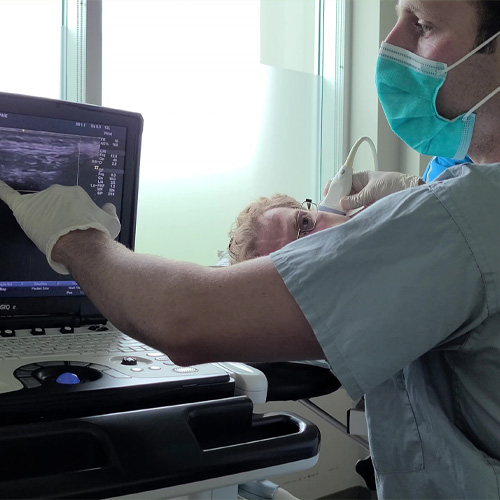
Beyond the Surface: Unlocking the Secrets of Diagnostic Imaging
At Momentum Health, our clinicians work closely with you to address the underlying cause of your pain, injury, or dysfunction, which helps provide lasting relief. One tool we use to accomplish this is diagnostic imaging.
What is Diagnostic Imaging?
Diagnostic imaging uses advanced technology, such as X-rays, ultrasounds, MRIs, and CT scans, to create detailed pictures of the structures inside your body. These images allow our clinicians to see your bones, muscles, joints, and other soft tissues. They also help us understand more about your condition, which allows us to develop the most effective treatment strategies that are specific to your needs.
For example, diagnostic ultrasound uses high-frequency sound waves to create its images, and it’s especially useful for diagnosing issues in your body’s soft tissues–the muscles, tendons, and ligaments. X-rays, on the other hand, can provide critical insights into fractures of bone or other joint-related issues.
How Do We Use It?
Our clinicians often order diagnostic imaging as part of a comprehensive assessment. When combined with a detailed medical history, clinical examination, and other diagnostic tests, imaging technology may provide other information that offers insight into your condition.
Call to Learn more
If you’re struggling with persistent pain or restricted movement, diagnostic imaging can help you better understand the root of your discomfort. Schedule an appointment at Momentum Health today to get started.
edited by Dr. Geoff Schneider